Introduction
Tracking the right Key Performance Indicators (KPIs) is essential for measuring the success of your medical billing revenue cycle. Without clear performance metrics, healthcare practices may struggle with hidden revenue leaks, delayed payments, and rising denial rates. Monitoring RCM KPIs helps providers identify problem areas, improve efficiency, and maximize reimbursements.
What Are Medical Billing Revenue Cycle KPIs?
Medical billing KPIs are measurable values that indicate how effectively a healthcare organization manages its billing, coding, claims, and collections. These metrics provide insights into financial performance, operational efficiency, and compliance.
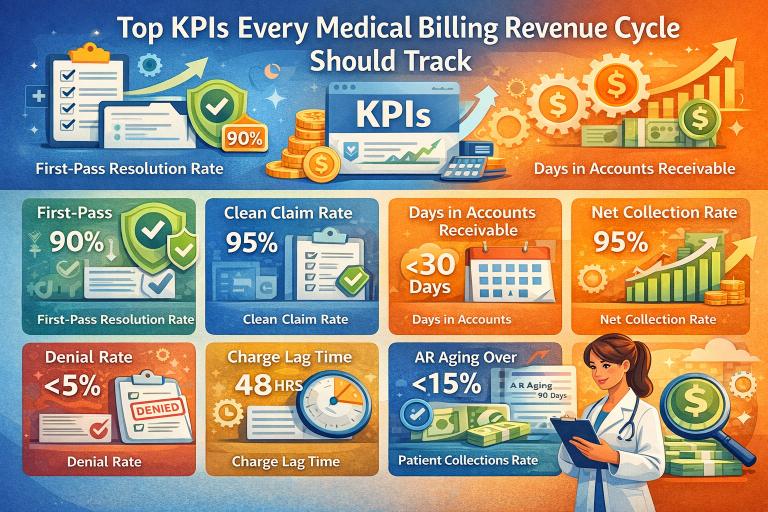
1. First-Pass Resolution Rate (FPRR)
What It Measures:
The percentage of claims paid on the first submission without edits or denials.
Why It Matters:
A high FPRR indicates clean claims and efficient billing workflows.
Industry Benchmark:
90% or higher
2. Clean Claim Rate
What It Measures:
The percentage of claims accepted by payers without errors.
Why It Matters:
Clean claims reduce rework, shorten payment cycles, and improve cash flow.
Industry Benchmark:
95% or higher
3. Days in Accounts Receivable (AR)
What It Measures:
The average number of days it takes to collect payment after services are rendered.
Why It Matters:
Lower AR days mean faster reimbursements and better liquidity.
Industry Benchmark:
Less than 30 days
4. Net Collection Rate (NCR)
What It Measures:
The percentage of collectible revenue that is actually collected after contractual adjustments.
Why It Matters:
This KPI reveals how much revenue is being lost due to inefficiencies.
Industry Benchmark:
95% or higher
5. Denial Rate
What It Measures:
The percentage of claims denied by insurance payers.
Why It Matters:
High denial rates indicate issues with coding, eligibility verification, or documentation.
Industry Benchmark:
Less than 5%
6. Charge Lag Time
What It Measures:
The time between service delivery and charge entry into the billing system.
Why It Matters:
Delayed charge entry can result in missed filing deadlines and cash flow disruptions.
Industry Benchmark:
24–48 hours
7. AR Aging Over 90 Days
What It Measures:
The percentage of outstanding accounts receivable older than 90 days.
Why It Matters:
Older AR is harder to collect and signals weak follow-up processes.
Industry Benchmark:
Less than 15%
8. Patient Collection Rate
What It Measures:
The percentage of patient-responsible balances collected.
Why It Matters:
With rising patient financial responsibility, this KPI is critical for revenue stability.
Industry Benchmark:
Above 90%
9. Payment Posting Accuracy
What It Measures:
The accuracy of insurance and patient payment posting.
Why It Matters:
Incorrect posting leads to reporting errors, patient dissatisfaction, and compliance risks.
Industry Benchmark:
98% or higher accuracy
How Tracking KPIs Improves Medical Billing Performance
Monitoring these KPIs helps practices:
- Identify revenue leaks early
- Reduce denials and rejections
- Improve cash flow predictability
- Strengthen compliance and reporting
- Make data-driven operational decisions
Using Technology to Monitor RCM KPIs
Modern RCM systems provide real-time dashboards and automated reports that make KPI tracking easier. These tools allow billing teams to act quickly on performance gaps and optimize workflows continuously.
Conclusion
Tracking the right medical billing revenue cycle KPIs is essential for financial success in healthcare. By consistently monitoring and improving these metrics, providers can strengthen their revenue cycle, reduce inefficiencies, and ensure long-term practice growth.