Introduction
Medical coding is a critical component of the medical billing revenue cycle. It serves as the bridge between clinical services and financial reimbursement. Accurate medical coding ensures healthcare providers are paid correctly, compliantly, and on time. Even small coding errors can lead to claim denials, delayed payments, or compliance risks—making coding a cornerstone of effective Revenue Cycle Management (RCM).
What Is Medical Coding?
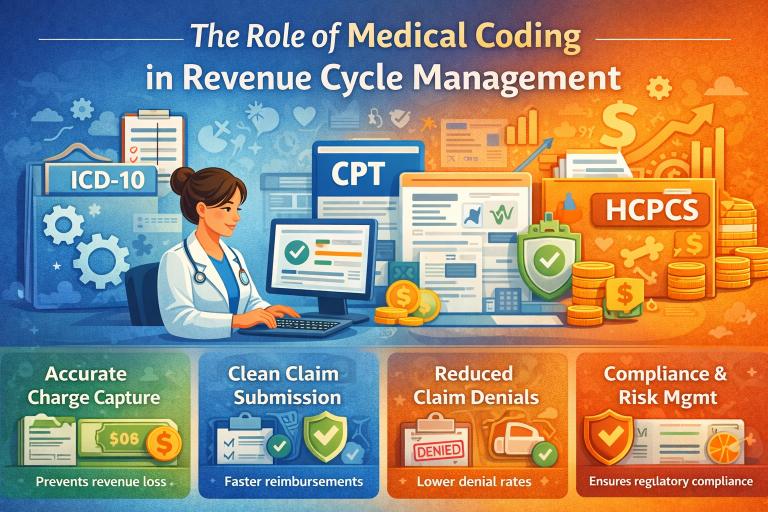
Medical coding is the process of translating medical diagnoses, procedures, and services into standardized codes such as:
- ICD-10 (Diagnosis codes)
- CPT (Procedure codes)
- HCPCS (Supplies and non-physician services)
These codes are used by insurance companies to determine coverage, reimbursement amounts, and medical necessity.
Why Medical Coding Is Essential in RCM
Medical coding directly impacts nearly every stage of the revenue cycle. From claim submission to payment posting, accurate codes ensure smooth financial operations and regulatory compliance.
How Medical Coding Supports the Revenue Cycle
1. Accurate Charge Capture
Proper coding ensures all services provided are documented and billed correctly.
RCM Impact:
Prevents underbilling and revenue loss.
2. Clean Claim Submission
Correct codes reduce errors during claim submission and improve first-pass acceptance rates.
RCM Impact:
Faster reimbursements and fewer rejections.
3. Reduced Claim Denials
Many claim denials occur due to coding errors, mismatched diagnoses, or outdated codes.
RCM Impact:
Lower denial rates and reduced rework.
4. Compliance and Risk Management
Accurate coding ensures compliance with payer rules, Medicare guidelines, and regulatory requirements.
RCM Impact:
Reduces audit risks, penalties, and legal exposure.
5. Optimized Reimbursements
Proper code selection ensures providers receive the maximum allowable reimbursement for services rendered.
RCM Impact:
Improved net collection rate and profitability.
Common Medical Coding Challenges
- Upcoding or undercoding
- Use of outdated or invalid codes
- Insufficient clinical documentation
- Lack of coder training
- Frequent regulatory and coding updates
Best Practices for Effective Medical Coding
- Employ certified medical coders
- Conduct regular internal and external coding audits
- Keep up with ICD-10 and CPT updates
- Use coding compliance tools
- Encourage collaboration between providers and coders
The Role of Technology in Medical Coding
Advanced RCM and coding software uses automation and AI-assisted tools to identify errors, validate codes, and ensure compliance. These technologies improve accuracy while reducing manual workload.
Outsourcing Medical Coding for Better RCM Performance
Many healthcare practices outsource medical coding to specialized RCM companies. Outsourcing provides access to certified experts, up-to-date knowledge, and scalable support—leading to higher accuracy and faster reimbursements.
Conclusion
Medical coding is the backbone of medical billing revenue cycle management. Accurate and compliant coding not only ensures timely payments but also strengthens the overall financial health of a healthcare organization. Investing in strong coding practices is essential for a successful and sustainable revenue cycle.